As you may have inferred from the title of this post, I will be discontinuing this blog after this final post. Once I graduate high school, I will be off to college and I will have a lot of things to think about. Although I am sure I will carry my interest in language with me throughout the rest of my life, I think if I decide to blog again in the future, I will mix it up and chose a new topic to blog about. However, it is time for this blog to come to a close and I'd like to take some time out to wrap it up nicely.
What Have I Learned?
There have been a surprising number of things that I have learned during the process of blogging on (Language) Arts + Crafts. The process of writing a blog plost often leads to a bit of web surfing/purusing/researching and doing this has taught me a lot about ideas that puzzled me initially. For example, why does one chose to write a memoir? Just the other week I blogged about my newfound progress in analyzing poetry thanks to my english teacher. As I look back on all the posts I have written (literally I am looking at them right now), I can remember learning something from almost every one, whether it be about mantras, literary devices, translation, advertisements, politics, technology, perspective, even museums. Ok, so that was a bit of a shameless plug for some of my earlier posts, in case you missed them. But, I am being serious that blogging has taught me a lot more than I ever expected.
The experience of writing this blog will help me for years to come. It has helped me better understand what it takes be truly heard on the internet. You cannot simply write a blog and expect people to read it. Like any new product, it must be advertised and made known to people in order for it to take off. Seeing as I plan to major in business in college, this was a key lesson for me. However, this blog is not about business, it is about language. And, while English remains my weakest subject in school, I believe this year I have gained a new appreciation for language, and thus, I have improved in my analysis of it as well.
My greatest wish with regard to language, is for people to appreciate it. Language is essential to our humanity, yet too often people take it for granted. In my experience, fewer and fewer people appreciate great poets, or authors, or lyricists. That is what frustrates me. I already consider this blog a success because it has helped me appreciate language more. But, if this blog has made anyone else appreciate any aspect of language just a tiny bit more than they had, then I will be even more thrilled. Feel free to comment if my blog has had any impact on you at all :]
Sunday, May 8, 2011

Sunday, April 17, 2011
A Post About Poetry
Though this blog is dedicated to language, you may have noticed that so far, I have failed to address a fairly significant area of literature: poetry. This has been partially intentional. You see, poetry and I have a very interesting relationship. On one hand, I really and truly appreciate the beauty of poetry and the skillful mastery of language that is required to write good poetry. For this reason, I love rap music and I love reading my classmate Kate's blog which often deals with poetry. On the other hand, it is really frustrating when I can't understand the meaning or purpose behind a poem no matter how hard I try (this happens fairly often). My ineptitude in analyzing poetry is why I have steered clear of poetry on this blog.
But no longer!
In English class on Friday, our teacher introduced the upcoming poetry unit. I have a feeling that this poetry unit will be different than any other I have endured previously. At the start of class, our teacher passed out a MAGICAL goldenrod sheet. The sheet (which I will protect at all costs) provides some basic questions to ask/things to consider when analyzing poetry. Once we had looked over the sheet, we proceeded to read and analyze the poem entitled On Reading Poems to a Senior Class at South High by D.C. Berry. The goldenrod sheet provided me with a basic strategy for unpacking poetry and I was able to successfully break down the poem and comprehend it!
If other students are anything like me, then they could also use some tips on analyzing poetry. I attempted to scan the sheet but it came out blurry when I tried to upload it. But, I have taken the liberty of retyping it. Hopefully, it will help your relationship with poetry, as it has with mine.
Here it is:
Analyzing poetry is like conducting an interview in many ways. You want to start with a script of questions and things you know you'll need to cover, but new questions will also occur to you as you listen to what the poem is saying. The questions on this page are the scripted questions and your answers will form most of your annotation. You should also write down the new questions that come to your mind as you read the poem.
1. What is the poem saying?
a) Read the poem through for sense, paying attention to the sentence--not the line--as the principal unit of organization. Find the subject and verb and mark the end of sentences.
b) Look up any words you don't know
c) Identify the antecedent of all pronouns
d) Paraphrase the poem
2. What is the situation of the poem?
a) Who is the speaker? What is the speaker like?
b) Who is the addressee and/or audience? (Not always the same)
c) What is the occasion and setting of the poem?
3. How has the author constructed the poem?
a) Consider the title
b) Consider the structure - line breaks, stanza breaks, shifts in time/tense, meaning or tone
c) Consider connotation and diction. Is there recurrent vocabulary from a specific realm?
d) Consider the mood/tone. Is irony a factor?
e) Consider imagery. Are the images figurative or literal?
f) Consider simile, metaphor, symbol, analogy, etc. Are the metaphors stock, conventional or original?
g) Consider meter, form and sound (includes assonance, consonance, slant rhyme, etc.)
h) What other literary devices has the author employed?
4. What is the theme/purpose of the poem? What are the most important elements that contribute to it?
Sidenote: If you google the poem On Reading Poems to a Senior Class at South High, you will find an infinite number of analysis papers/blogs.
Monday, April 11, 2011
Found In Translation
Hello world, I hope you did not worry too much about me during my mini hiatus haha ;) I was on my spring break. Unfortunately, I was not able to travel anywhere warm or exotic because of my commitment to the baseball team. Fortunately, this gave me an ample amount of time to read the book Walk Two Moons (book webpage) by Sharon Creech......in Spanish. I wish that this had been a spontaneous decision of mine, but in truth, our spanish teacher assigned us to read a book of our choice in Spanish over break. I chose Entre Dos Lunas because it was a book that I probably should have read as a child, but never got around to it. So, this seemed like the perfect opportunity. Little did I know it would lead to my next blog post!
As I was reading, I thought the translator did a really nice job taking the story and bringing it to life using the Spanish language. Since I have not read the English version, I had nothing to compare it to, but the story seemed to have most of the nuances that I expect were written into the original. The tone of the vibrant, energetic characters was clear and the occasional sarcasm was not lost in translation. So was this really any different than reading the book in English? Does reading anything in another language have an impact on the readers' experience? How much?
After some thought and a little poking around on the Internet, I have concluded that the answers to those questions are respectively: Yes, Yes and It Depends. While reading Entre Dos Lunas, there were still some aspects of the story that were not able to be carried over to Spanish. For example, there is a character named Margaret Cadaver. Obviously the word cadaver has no meaning in the Spanish language. Despite this and a few other things, I found that reading Entre Dos Lunas was very enjoyable and nothing appeared to be left out.
Still, I think the translation of a novel, poem, etc. can potentially downgrade the reader's experience. One reason for this is a sub-par translation. Here is one blogger's take on translators that I agree with. However, even if you read the best translation possible, there will be parts that cannot crossover, especially in great works of literature that the author has crafted skillfully using the original language.
This is not to discourage anyone from reading a translated text. If the only way you can read Pablo Neruda is in english, then by all means read it! But, keep in mind that you're reading a text that is subject to the whims of a translator and may not offer all the original does.
Monday, March 14, 2011
Mantras
The other day, I had the song O-o-h Child by The Five Stairsteps stuck in my head. Now you may be thinking a few things like: "Wow! What a great song" or "Wow! Nick has such great taste" or "Wow! Who cares?" You may even be thinking all of these things. However, I will tell you why this particular occurrence is important; it inspired me to write this fantastic blog post about mantras.
Now, I thought I knew what a mantra was. But, when I did a little research I found out that I was not exactly on the right track. A basic definition of a mantra is a sound, syllable, word, or group of words that are considered capable of "creating transformation." I also came across this website that provides a much more thorough definition. Anyways, mantras originated in the Vedic tradition of India, eventually becoming a vital part of Hindu religion as well as other eastern religions including Buddhism, Sikhism and Jainism. They are often used to facilitate meditation and concentrate on spiritual advancement. The most well known mantra is the "Om" or "aum" mantra, also known as the "pranava mantra," the source of all mantras.
Today, I think its fair to say that most westerners understand a mantra to be something along the lines of a repeated personal statement that helps a person remember/focus on their goal, values, etc. I'm no psychologist, but I believe that in some cases mantras can be very powerful, even outside the realm of spirituality and religion. For instance, as the words "o-o-h child, things are gonna get easier" went through my head constantly throughout the school day, I found it became much easier to endure some of my brutally boring classes and my fitness day in gym.
The first "mantra" that I was exposed to appeared in the book The Little Engine That Could. The little engine repeated the phrase "I think I can, I think I can" over and over, and he eventually pulls the long train over the mountain. Yay! Anyways, if any of you have any knowledge/information on the psychology of mantras and how effective they are, feel free to comment below! I would be very interested to know more about them, considering the "I think I can" mantra was so integral to my childhood years. Thanks!
And now for a more recent and more humorous mantra:
Now, I thought I knew what a mantra was. But, when I did a little research I found out that I was not exactly on the right track. A basic definition of a mantra is a sound, syllable, word, or group of words that are considered capable of "creating transformation." I also came across this website that provides a much more thorough definition. Anyways, mantras originated in the Vedic tradition of India, eventually becoming a vital part of Hindu religion as well as other eastern religions including Buddhism, Sikhism and Jainism. They are often used to facilitate meditation and concentrate on spiritual advancement. The most well known mantra is the "Om" or "aum" mantra, also known as the "pranava mantra," the source of all mantras.
Today, I think its fair to say that most westerners understand a mantra to be something along the lines of a repeated personal statement that helps a person remember/focus on their goal, values, etc. I'm no psychologist, but I believe that in some cases mantras can be very powerful, even outside the realm of spirituality and religion. For instance, as the words "o-o-h child, things are gonna get easier" went through my head constantly throughout the school day, I found it became much easier to endure some of my brutally boring classes and my fitness day in gym.
The first "mantra" that I was exposed to appeared in the book The Little Engine That Could. The little engine repeated the phrase "I think I can, I think I can" over and over, and he eventually pulls the long train over the mountain. Yay! Anyways, if any of you have any knowledge/information on the psychology of mantras and how effective they are, feel free to comment below! I would be very interested to know more about them, considering the "I think I can" mantra was so integral to my childhood years. Thanks!

And now for a more recent and more humorous mantra:
Monday, March 7, 2011
Approaching Literature
So, as you may know, I am a senior in high school. And, in our class we are just finishing up Hamlet by William Shakespeare. As we read the play, our primary focus was on critical approaches. Here are a few from the Purdue University website. The approaches that we examined included...
-Feminist
-Psychoanalytic
-Marxist
-Formalist
-Mythological
-New Historic
-Reader Response
These various approaches each offer a different perspective to Hamlet (or any work of literature) and something can be gained from each one. When you look at a work of literature through these individual lenses, it increases the value of the literature exponentially.
I have traditionally read books from a basic formalist approach, trying to analyze literary devices and form my own interpretations of the purpose of the piece. However, when you read a work of literature using a different critical approach, you tend to have different questions in mind. For example, questions that feminist critics may ask are "What does the work reveal about the operations of patriarchy?" "How does the work define femininity and masculinity?" "What role does the work play in terms of women's literary tradition throughout history?"
However, my classmates and I have all noticed that questions like these that arise from critical approaches can be asked about many subjects beyond literature. Here are some of my peers' blogs that take the ideas I have discussed and apply them to the real world.
Kate's post on a feminist approach to poetry
Daniel's post on a Marxist approach to politics
Margot's post on critical approaches to journalism
Jamie's post on a feminist approach to society and herself
*If you're interested in learning more about critical approaches to literature, I highly recommend you take a look at Critical Theory Today: A User-Friendly Guide by Lois Tyson.
Monday, February 28, 2011
Oscar's Dialogue
In honor of the Oscars last night, I thought I would write a post about dialogue, specifically in movies. Now, my favorite movie of all time is Pulp Fiction. In my humble opinion, the dialogue in that movie is unbelievable. Something about the interaction between the characters (especially Samuel L. Jackson and John Travolta) thoroughly entertains me. For instance, I love the irony of the trivial conversation Jules and Vincent are having about cheeseburgers and foot massages right as they are about to kill three men.....Genius. Anyways, I won't ruin any more of the movie for you guys. Just go watch it and comment back after.
But I digress, let's discuss the dialogue in some of the nominated films this year.
#1. The King's Speech -I am going to be honest, I did not see this one. I'm going to be honest again: I had no desire to see this British period piece about speech impediments. However, The King's Speech took home the award for best picture, and I may just change my mind. Any movie that can win an Oscar despite such boring subject matter must have some superb dialogue.
#2. The Social Network - I did see this one, and I loved it. The dialogue (and the acting) was stellar. I found myself constantly entertained and emotionally invested in the characters. Jesse Eisenberg was fantastic and his lines were extraodinarily clever and biting and witty. I also thought Justin Timberlake did a great job as Sean Parker. The dialogue of the Social Network really engaged me and I caught myself getting pissed off at the characters of Zuckerberg and Parker. That's how I know that the dialogue was successful.
#3. Inception - I have seen Inception twice and neither time did I pay particular attention to the dialogue. However, looking back, I can definitely pick out spots where the dialogue really contributed to the character development and enhanced my viewing experience. The dialogue from Leo DiCaprio's wife in the movie is especially compelling. While it only occurs in brief spurts, the language in her lines really reveals the nature of her troubled and delusional state. The Oscar judges must have felt similarly, seeing as they nominated Inception for Best Original Screenplay.
#4. Inside Job - The final nominated film that I saw was the documentary Inside Job. I watched it for extra credit in my macroeconomics class and ended up liking it a lot. Now because this is a documentary, you may not think there is a lot of dialogue, which is true. However, there are numerous unscripted interviews that require strategic finessing and careful editing to produce the required result. In this case, the goal was to make all the elite bankers and politicians sound guilty and Inside Job definitely succeeded.
Now that I've taken a closer look at a few of these movies, I think the power of dialogue is clear. The things a character says are the best way for a viewer/reader to understand the character and become invested in the story. The language in dialogue is especially powerful because, it comes straight from the character, with no opportunity for miscommunication. In that way dialogue becomes realer than even the most detailed descriptions.
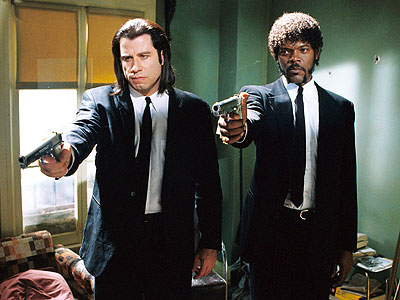
But I digress, let's discuss the dialogue in some of the nominated films this year.
#1. The King's Speech -I am going to be honest, I did not see this one. I'm going to be honest again: I had no desire to see this British period piece about speech impediments. However, The King's Speech took home the award for best picture, and I may just change my mind. Any movie that can win an Oscar despite such boring subject matter must have some superb dialogue.
#2. The Social Network - I did see this one, and I loved it. The dialogue (and the acting) was stellar. I found myself constantly entertained and emotionally invested in the characters. Jesse Eisenberg was fantastic and his lines were extraodinarily clever and biting and witty. I also thought Justin Timberlake did a great job as Sean Parker. The dialogue of the Social Network really engaged me and I caught myself getting pissed off at the characters of Zuckerberg and Parker. That's how I know that the dialogue was successful.
#3. Inception - I have seen Inception twice and neither time did I pay particular attention to the dialogue. However, looking back, I can definitely pick out spots where the dialogue really contributed to the character development and enhanced my viewing experience. The dialogue from Leo DiCaprio's wife in the movie is especially compelling. While it only occurs in brief spurts, the language in her lines really reveals the nature of her troubled and delusional state. The Oscar judges must have felt similarly, seeing as they nominated Inception for Best Original Screenplay.
#4. Inside Job - The final nominated film that I saw was the documentary Inside Job. I watched it for extra credit in my macroeconomics class and ended up liking it a lot. Now because this is a documentary, you may not think there is a lot of dialogue, which is true. However, there are numerous unscripted interviews that require strategic finessing and careful editing to produce the required result. In this case, the goal was to make all the elite bankers and politicians sound guilty and Inside Job definitely succeeded.
Now that I've taken a closer look at a few of these movies, I think the power of dialogue is clear. The things a character says are the best way for a viewer/reader to understand the character and become invested in the story. The language in dialogue is especially powerful because, it comes straight from the character, with no opportunity for miscommunication. In that way dialogue becomes realer than even the most detailed descriptions.
Monday, February 14, 2011
Wake Up Everybody!
This Sunday, the 2011 Grammy Award Ceremony took place. And while I was thoroughly amused by Lady Gaga's latest shenanigans, I was happily shocked when they announced the winner for Best Rap/Sung Collaboration. Wake Up Everybody by John Legend & The Roots (Feat. Common & Melanie Fiona) took home the Grammy much to my personal satisfaction. Now perhaps I should explain my happiness..... It seems to me that nowadays, the subject matter of most successful songs is all the same. Everywhere I look (or listen in this case), all I hear is someone singing or rapping about how much money they have or their bedroom escapades or how many drugs they have done/sold. And while I am certainly not opposed to all songs that may concern these topics, in my opinion it is getting a little old. That's why I was so excited when Wake Up Everybody won. Here is the video and the lyrics (originally written for Harold Melvin & the Blue Notes in 1975 - except Common's verse) :
Wake up everybody
No more sleeping in bed
No more backward thinking,
Time for thinking ahead
The world has changed
So very much
From what is used to be
There is so much hatred
War and poverty
Wake up all the teachers
Time to teach a new way
Maybe then they'll listen
To what you have to say
'Cause they're the ones who's coming now
When the world is in their hands
When you teach the children
Teach the very best you can
[Chorus - John Legend & Melanie Fiona]
The world won't get no better
If we just let it be
The world won't get no better
We gotta change it, yeah
Just you and me
Wake up all the doctors,
Make the old people well
They're the ones who suffer
And who catch all the hell
But they don't have so very long
Before the Judgement Day
So won't you make them happy
Before they pass away
Wake up all the builders
Time to build a new land
I know we can do it
If we all lend a hand
The only thing we have to do
Is put it in our minds
Surely things will work out
'Cause they do everytime
(Chorus)
[Common]
It's the God hour
The morning I wake up
Just for the breath of life I thank my maker
My mom say I come from hustlers and shakers
My mom built it on skyscrapers and acres
He said take us back to where we belong
I try to write a song
As sweet as these arms the one the type to bare arms
And wear my heart on my sleeve
Even when I fell in God I believe
Read the days that weave through the maze
The seasons so amazing
Feed them and raised them
Seasons are aging
Earthquakes, wars, and rumors
I want us to get by but
We're more than consumers
We more than shooters, more than looters
Created in His image so God live through us
And even in this generation, living through computers
Only love love love can reboot us
Ohh Wake up, everybody
No more sleeping in bed
Ohh Wake up, everybody
I said I need a little help, y'all
Ohh need a little help, y'all
Come on, come on, come on, come on
Need a little help y'all
Ohh Need a little help, y'all
Wake up everybody
Wake up everybody
Wake up everybody
Celebrities and musicians have had a prominent place in American society for a long time. And like a wise man once said, "with great power comes great responsibility." Now more than ever, they are constantly in the public eye and influence over millions of people across the globe with the language in their songs. The last thing we need is for more musicians to fill the heads of Americans with songs that glorify drugs, sex, violence, etc. The more we hear this type of language, the more we believe it. Let's get this straight, I am not censuring these types of songs in any way (I know I have several on my iPod). But the incredible onslaught of music with this sort of subject matter is certainly not good, especially for young and impressionable kids. That's why the emowering, positive message of Wake Up Everybody was such breath of fresh air. The fact that it won a Grammy tells me that there is hope for the music industry yet.

Wake up everybody
No more sleeping in bed
No more backward thinking,
Time for thinking ahead
The world has changed
So very much
From what is used to be
There is so much hatred
War and poverty
Wake up all the teachers
Time to teach a new way
Maybe then they'll listen
To what you have to say
'Cause they're the ones who's coming now
When the world is in their hands
When you teach the children
Teach the very best you can
[Chorus - John Legend & Melanie Fiona]
The world won't get no better
If we just let it be
The world won't get no better
We gotta change it, yeah
Just you and me
Wake up all the doctors,
Make the old people well
They're the ones who suffer
And who catch all the hell
But they don't have so very long
Before the Judgement Day
So won't you make them happy
Before they pass away
Wake up all the builders
Time to build a new land
I know we can do it
If we all lend a hand
The only thing we have to do
Is put it in our minds
Surely things will work out
'Cause they do everytime
(Chorus)
[Common]
It's the God hour
The morning I wake up
Just for the breath of life I thank my maker
My mom say I come from hustlers and shakers
My mom built it on skyscrapers and acres
He said take us back to where we belong
I try to write a song
As sweet as these arms the one the type to bare arms
And wear my heart on my sleeve
Even when I fell in God I believe
Read the days that weave through the maze
The seasons so amazing
Feed them and raised them
Seasons are aging
Earthquakes, wars, and rumors
I want us to get by but
We're more than consumers
We more than shooters, more than looters
Created in His image so God live through us
And even in this generation, living through computers
Only love love love can reboot us
Ohh Wake up, everybody
No more sleeping in bed
Ohh Wake up, everybody
I said I need a little help, y'all
Ohh need a little help, y'all
Come on, come on, come on, come on
Need a little help y'all
Ohh Need a little help, y'all
Wake up everybody
Wake up everybody
Wake up everybody
Celebrities and musicians have had a prominent place in American society for a long time. And like a wise man once said, "with great power comes great responsibility." Now more than ever, they are constantly in the public eye and influence over millions of people across the globe with the language in their songs. The last thing we need is for more musicians to fill the heads of Americans with songs that glorify drugs, sex, violence, etc. The more we hear this type of language, the more we believe it. Let's get this straight, I am not censuring these types of songs in any way (I know I have several on my iPod). But the incredible onslaught of music with this sort of subject matter is certainly not good, especially for young and impressionable kids. That's why the emowering, positive message of Wake Up Everybody was such breath of fresh air. The fact that it won a Grammy tells me that there is hope for the music industry yet.

Monday, February 7, 2011
Commercial Language
Lately, I've been doing a lot of analyzing and commenting on issues and whatnot. So, I've decided to bring it all back down to Earth and talk a little bit about me and what has been on my mind lately (with a language twist of course).

Being a sports fan, this weekend I watched the Green Bay Packers win Super Bowl XLV. Now, I won't say I was happy that the Packers won, but I was thrilled that the Steelers lost. Moving on, what really inspired me to write this blog was of course.......Super Bowl commercials. Gotta love 'em right? Anyways, as I was watching them, I realized how numb I have become to the actual words being uttered in each commercial. The sensory overload that happens as a result of constant advertisements, causes me to completely tune out any commercials unless they are 1) funny or 2) have high enough shock value. Nowadays, it seems as if many companies are dead set on creating a commercial that is as funny as possible, and then, they slap their name at the end of it.
When I thought about why that is, I came to a conclusion: obviously, the funny/shocking commercials are the ones I remember and even if I don't know what the advertisement is promoting, I remember the company's name. However, it doesn't stop there. Commercials that try simply using language to describe a product, without humor or shock value, are dull and obsolete. We have been overloaded by so many advertisements that the words in commercials are no longer important because everyone is saying the exact same thing: their product is the best. This can be seen almost everywhere, especially with car commercials. With out even listening to a commercial, I can already assume that a classic car advertisement is going to mention the car's awesome performance, excellent safety rating, great fuel efficiency and likely some sort of sale or promotion going on at the dealerships. What else is new? Subconsciously, I know what these car/beer/paper towel/fertilizer/etc. commercials are all going to say, so I tune out.
It seems companies have begun to realize this and thus, are focusing more and more on the funny/shock factor and less and less on the words. I will tell you this, I can only remember two car commercials the Super Bowl off the top of my head. Neither of them said one word about the actual car.
The first is the Volkswagen commercial with the kid dressed as Darth Vader.
The second was a Kia commercial where the car was "caught" by a helicopter but then Poseiden came out and grabbed it, sent it into a UFO where it drove into a black hole and emerged in a Mayan-like civilization. Yeah, quite strange, but I remembered it for some reason.
In a nutshell, thinking about this new breed of commercial made me recognize the limitations of language in our modern society due to information overload. However, understanding this concept made me further appreciate the power of language that comes in the form of a great book. It is unparalleled.
Wednesday, January 26, 2011
Winning the Future
Yesterday, like many Americans, I watched President Obama's 2011 State of the Union and Republican Representative Paul Ryan's response. While it did give me a little hope, I was still frustrated with the mixed signals regarding the economy and the budget deficit. Obama stated that we are going to reduce spending, while investing in the future. Huh? And, the Republicans are convinced that cutting spending will create jobs. I'm not so sure about that one either. AND, everyone is talking about reducing the deficit but there are no concrete plans to touch Medicare, Medicaid or Social Security. Despite all this, there was one idea that Obama carried throughout his speech that resonated with me:
"Winning the Future"
Now, this is a language blog. So, let's talk a little about the language here. President Obama (+ his speechwriter) is an excellent speech writer and he chose these words for a reason. Beginning with this phrase, the speech placed an overwhelming emphasis on the future. This may seem a little obvious because the high unemployment levels and ballooning deficit are major threats to the country's wellbeing. However, we should note that there was almost no mention of Obama's accomplishments to this point aside from his defense of health care reform from Republicans attempting to repeal it. Obama showed that he has felt the people's sense of urgency and by using the entire speech to address fears about the deficit, unemployment and America's weakening hegemony.
Winning is the other key piece of this phrase. By declaring that we must win the future, Obama has simplified the fate of America into a game. By doing this, Obama skillfully unifies the American people by putting them all on the same "team."
There are two different ways Obama employs this game metaphor. The first is a sort of competition where our opponents are China, India and the other nations on the rise that are threatening American dominance. In his speech Obama acknowledged the competition and identified where we need to focus our attention in order to "win." His strategies included investing in education and small businesses to encourage innovation.
However, the other game is a little more like Tetris. It is a one-player game where America is given a domestic puzzle that we have to solve: how to fix the economy, create jobs and reduce the deficit all at the same time. A game like this demands efficiency and foresight. However, the strategies that Obama offered in his speech to solve this puzzle were lacking in these areas and it was frustrating. I did not hear any concrete plans or specific moves to solve these major problems. Despite this, I thought the idea of winning the future was a very effective way of uniting the country.
"Winning the Future"
Now, this is a language blog. So, let's talk a little about the language here. President Obama (+ his speechwriter) is an excellent speech writer and he chose these words for a reason. Beginning with this phrase, the speech placed an overwhelming emphasis on the future. This may seem a little obvious because the high unemployment levels and ballooning deficit are major threats to the country's wellbeing. However, we should note that there was almost no mention of Obama's accomplishments to this point aside from his defense of health care reform from Republicans attempting to repeal it. Obama showed that he has felt the people's sense of urgency and by using the entire speech to address fears about the deficit, unemployment and America's weakening hegemony.
Winning is the other key piece of this phrase. By declaring that we must win the future, Obama has simplified the fate of America into a game. By doing this, Obama skillfully unifies the American people by putting them all on the same "team."

There are two different ways Obama employs this game metaphor. The first is a sort of competition where our opponents are China, India and the other nations on the rise that are threatening American dominance. In his speech Obama acknowledged the competition and identified where we need to focus our attention in order to "win." His strategies included investing in education and small businesses to encourage innovation.
However, the other game is a little more like Tetris. It is a one-player game where America is given a domestic puzzle that we have to solve: how to fix the economy, create jobs and reduce the deficit all at the same time. A game like this demands efficiency and foresight. However, the strategies that Obama offered in his speech to solve this puzzle were lacking in these areas and it was frustrating. I did not hear any concrete plans or specific moves to solve these major problems. Despite this, I thought the idea of winning the future was a very effective way of uniting the country.
Sunday, January 2, 2011
Book Review: The 7 Habits...
A lot of the literature that I have discussed on my blog has been from my English class. So, I figured it was time to mix things up a bit and share some of my thoughts on a book that I read over the summer. It is called The 7 Habits of Highly Effective Teens. Now, I know what you're probably thinking. Why would I ever consider reading some lame self-help book for teens? And, even worse, what was I thinking when I decided to write a post about it on my highly respectable blog? Well, I will answer both those questions (and any others if you decide to comment on this post). First, I was required to read it for my school-sponsored Habitat for Humanity trip. Second, I am writing this post because 7 Habits is a worthwhile read.
When I found out I had to read this book, it did not go over well. I was expecting a cheesy, condescending tone from an author that preached all about how to be a good kid that never breaks any rules or has any fun. I think that's why I liked it so much. The author, Sean Covey, does his best to actually connect with teenagers, mixing in humor and stories from his own life. I'd say that he does a fairly decent job keeping his writing style engaging and not annoying or preachy. However, there were certain points when his language made me feel like I was being given a lecture. Since my expectations were already low, these instances didn't come as a surprise and I didn't let them ruin the book for me. There IS a lot of good stuff in this book and I think that the best way to approach reading 7 Habits is to take it with a tiny grain of salt.
The entire book may not apply to you. There may be areas of your life where you are completely satisfied: school or friends or family, etc. But, for the areas that you are not happy with, I think this book offers some great strategies and basic attitudes/philosophies that can be really useful. Reading this book gave me an opportunity to take a step back and look at many of the aspects of my life. I was able to see where I wanted to improve myself. And that's the great thing: I saw where I wanted to improve. Don't view this book as the Bible or an instruction manual. Use it to your benefit. Pick and choose what you want to take away from it.
I realize I haven't talked much about the actual book. I'm not going to give you much because the experience of reading 7 Habits is much better than any quick summary I could give. The best part is being able to connect to all Covey's tips, suggestions and strategies and seeing where they fit in your own life. However if you must know, some of the basic concepts in this book include being proactive, prioritizing, dependency, relationships, self-worth and lots of other things every teen should think about. All in all, if you read this book right, I think you can get a lot out of it.
Sean Covey's website
FYI - Sean Covey is the son of Stephen Covey, author of The 7 Habits of Highly Effective People. If any of you have read this book and/or The 7 Habits of Highly Effective Teens, feel free to comment with your views on the books and this post. Thanks!
Friday, December 31, 2010
URL change!!!
Hey all! I have just changed my URL to http://languageartsandcrafts.blogspot.com/. Considering that is the title of my blog, I thought it would be more convenient for web surfers across the globe.
Tuesday, December 14, 2010
Sup? Nmu? Nm. Aight ttyl.
 Recently, I was exploring the world wide web and blogosphere in search of ideas for my blog. My quest was momentarily interrupted by an instant message on Facebook sent by one of my friends. It read: sup dood, howd the test go 2day? ugh i effing hate dat class... * I was absolutely appalled at his abuse of the English language. Haha, only kidding. Truthfully, I talk like that all the time over the internet. However, this is the first time that I've ever wondered about the ramafications of chat-speak.

After some perusing (if you haven't noticed from my past posts, I like that word a lot), I found this little number: Social Criticisms of Chat Rooms and Texting Language. One of the major concerns brought up in the article is how writing is changing as it aquires "some of the functions and figures of speech." The critics fear that this new branch of hybrid-English made up of slang words and abbreviations is gradually taking over common grammar. Adolescents, the most egregious offenders, are "changing the face of literacy" worldwide.
 Now, for my big two questions:
Is this a bad thing?
What are the implications of this phenomenon?
Despite this, I cannot say that I am vehimently opposed to chat-speak. It's convenience is unmatched, (especially on my old, keyboard-less phone). In fact, it is very probable, perhaps inevitable, that I will continue to use slang words and abbreviations. In today's world where time is money, it pays to be quick. The world is becoming faster-paced each day as technology advances. Young people are simply adapting to what they are given and in doing so, they have become innovators in many fields including communication and lanuage.
I find that a similar connection can be made to the evolution of music. As technology has advanced, the sound of music (no pun intended) has changed dramatically. From the electric guitar to the 808 drum machine to music computer programs that autotune sounds, music has progressed over time. Young people of each generation have adapted to these technological developments and changed the way we listen to music. Now, y music-language metaphor is not perfect and eventually breaks down. It is easy enough to continue listening to music from the past. Not as easy to speak in a language from the past. But, this metaphor has helped me keep an open mind to chat-speak. I like music from many time periods and appreciate the different styles and genres. If music can go through such significant transformations and still be "good" (very subjective), then I think it's possible that language can as well.
Feel free to COMMENT with your view on the evolution of the English language regarding chat-speak
Also, I stumbled across Peter Lee Johnson on Youtube.com. He is an extraordinary violinist in the Popular Music Performance Program at USC. In his videos, he takes a traditionally classical instrument and improvises over pop songs, creating something incredible.
Evolution and adaptation at their finest:
*I'm going to be completely honest. I made up that message entirely because I couldn't remember any of my recent instant message conversations. However, a message like that could have easily been sent by one of my friends; of that I am certain.
Tuesday, December 7, 2010
Why Memoir?
If you have been keeping up with my blog, then you'll know that I am currently reading a memoir entitled Reading Lolita in Tehran for my English class. Now, I have not had a ton of experience with memoir, so I set off to learn a little more about it. As I was perusing the blogosphere, I came across the blog of one of my classmates: Style and Structure: The Art of Writing (it's a quality blog that I suggest you check out in addition to mine). She had written a nice post about what makes a good memoir. It seemed to me that what makes a good memoir is almost the same as what makes a good novel: the story must not be too mundane, it must have structure along with developed characters and should include "situations with high-stakes circumstances." The question I still have though, is why memoir?
Throughout RLiT, Nafisi praises fiction and novels to the highest degree. Perhaps she is a little biased being an English professor, but I tend to agree with her when she discusses the power of great novels including their ablity to make us question reality. I don't want to dishonor her by paraphrasing so I'll just list a few choice quotes where her affinity for fiction is apparent...
I guess the obvious answer to "why memoir?" is that memoirs do not allow the reader to dismiss the story if it makes him/her uncomfortable. The reader cannot merely brush it aside by labeling it made-up or pretend. Memoirs force you to acknowledge the reality of the story being told. But, I felt like there was something more. So I typed in "why memoir?" into google, and this blog post showed up right away: Why Memoir? by Louise DeSalvo on Writingalife's Blog.
Despite the typo in the first paragraph ;), it gives some quality insight into the benefits of memoir. DeSalvo, asserts that memoir is about revealing the experience of life through memory. Memoir creates an intimate connection between the author and reader. Because the author is writing from their own memory, the reader sees everything the author sees, feels everything the author feels. The reader of a good memoir will get to know the author, empathize with them and become a witness to their story. This direct connection to the reader is what allows the author to effectively "transmit to humankind the memory of what we endured in body and soul." Empathy and connection to characters are big parts of fiction as well, but I believe that the level of intimacy between author and reader is unique to memoir and Nafisi probably realized this when deciding how to best tell her story.
Throughout RLiT, Nafisi praises fiction and novels to the highest degree. Perhaps she is a little biased being an English professor, but I tend to agree with her when she discusses the power of great novels including their ablity to make us question reality. I don't want to dishonor her by paraphrasing so I'll just list a few choice quotes where her affinity for fiction is apparent...
- "Every fairy tale offers the potential to surpass present limits, so in a sense the fair tale offers you freedoms that reality denies."
- "There is an affirmation of life [which] lies in the way the author takes control of reality by retelling it in his own way, thus creating a new world."
- "The perfection and beauty of form rebels against the ugliness and shabbiness of the subject matter"
- "This other world that is only attainable through fiction...becomes their refuge in a life that is constantly brutal."
I guess the obvious answer to "why memoir?" is that memoirs do not allow the reader to dismiss the story if it makes him/her uncomfortable. The reader cannot merely brush it aside by labeling it made-up or pretend. Memoirs force you to acknowledge the reality of the story being told. But, I felt like there was something more. So I typed in "why memoir?" into google, and this blog post showed up right away: Why Memoir? by Louise DeSalvo on Writingalife's Blog.
Despite the typo in the first paragraph ;), it gives some quality insight into the benefits of memoir. DeSalvo, asserts that memoir is about revealing the experience of life through memory. Memoir creates an intimate connection between the author and reader. Because the author is writing from their own memory, the reader sees everything the author sees, feels everything the author feels. The reader of a good memoir will get to know the author, empathize with them and become a witness to their story. This direct connection to the reader is what allows the author to effectively "transmit to humankind the memory of what we endured in body and soul." Empathy and connection to characters are big parts of fiction as well, but I believe that the level of intimacy between author and reader is unique to memoir and Nafisi probably realized this when deciding how to best tell her story.
Monday, November 29, 2010
Perspective
In class, we have just begun reading the book Reading Lolita in Tehran (quick summary) by Azar Nafisi. Initially, I was not too excited about reading this one. A memoir about an Iranian woman professor holding secret book club discussions about literature is generally not my cup of tea. To my surprise, it has held my interest for the most part thus far. I am only 77 pages in, but Nafisi is doing a great job keeping me engaged and thinking about some of the insights she and her class have made and parallels they've drawn.
 Reading Reading Lolita in Tehran (haha reading x2) is different from reading other novels. In the book, the women are analyzing literature and making connections and tracking themes and all that good stuff. However, as I read the novel, I am making annotations and drawing conclusions of my own. So, I find that a lot of the time I am analyzing the analyses of all the different women. DOUBLE ANALYSIS! Yeah, pretty crazy. All of these unique perspectives, as well as some of the literary analysis in Reading Lolita in Tehran (RLiT) have inspired me to write this post.
The first section of RLiT is entitled Lolita and discusses the reaction of the women to reading works of literature by Vladimir Nabokov. The two they focus on are Lolita (obvi) and Invitation to a Beheading. One of the themes throughout the section focuses on imprisonment and identity. In Lolita, a twelve-year-old girl (Lolita) is seduced by a middle aged man named Humbert Humbert. He turns Lolita into his fantasy and in that process, confiscates her life. Her identity is relient upon him. She is his prisoner. The book is written from Humbert's perspective, so the readers image of Lolita is inextricably linked to that of Humbert. Quoting Nafisi, "Lolita on her own has no meaning; she can only come to life through her prison bars." Her own self image and perspective is through the lens of Humbert, which is incredibly sad (at least I think so).
 Craft-wise, Nabokov has triumphed in choosing Humbert as his narrator. By, seeing the story through his eyes, we are able to understand the degree of Lolita's imprisonment and its implications. A while ago in class, we briefly discussed "personal narratives," identity and the way we view ourselves. In terms of Lolita, it is almost as if Humbert has robbed her of the ability to formulate her own personal narrative and he is writing it for her, where she is his mistress in his sick fantasy. And that's all she is. Here, we can see how the choice of perspective gives some quality insight into the relationship between the characters. In the case of Lolita, it shows the twisted intimacy between victim and jailer.
Reading Reading Lolita in Tehran (haha reading x2) is different from reading other novels. In the book, the women are analyzing literature and making connections and tracking themes and all that good stuff. However, as I read the novel, I am making annotations and drawing conclusions of my own. So, I find that a lot of the time I am analyzing the analyses of all the different women. DOUBLE ANALYSIS! Yeah, pretty crazy. All of these unique perspectives, as well as some of the literary analysis in Reading Lolita in Tehran (RLiT) have inspired me to write this post. The first section of RLiT is entitled Lolita and discusses the reaction of the women to reading works of literature by Vladimir Nabokov. The two they focus on are Lolita (obvi) and Invitation to a Beheading. One of the themes throughout the section focuses on imprisonment and identity. In Lolita, a twelve-year-old girl (Lolita) is seduced by a middle aged man named Humbert Humbert. He turns Lolita into his fantasy and in that process, confiscates her life. Her identity is relient upon him. She is his prisoner. The book is written from Humbert's perspective, so the readers image of Lolita is inextricably linked to that of Humbert. Quoting Nafisi, "Lolita on her own has no meaning; she can only come to life through her prison bars." Her own self image and perspective is through the lens of Humbert, which is incredibly sad (at least I think so).
Craft-wise, Nabokov has triumphed in choosing Humbert as his narrator. By, seeing the story through his eyes, we are able to understand the degree of Lolita's imprisonment and its implications. A while ago in class, we briefly discussed "personal narratives," identity and the way we view ourselves. In terms of Lolita, it is almost as if Humbert has robbed her of the ability to formulate her own personal narrative and he is writing it for her, where she is his mistress in his sick fantasy. And that's all she is. Here, we can see how the choice of perspective gives some quality insight into the relationship between the characters. In the case of Lolita, it shows the twisted intimacy between victim and jailer.Monday, November 15, 2010
Link
 Last Friday, I went to see three presenters from the organization LiNK (Liberty in North Korea) come and speak at school. While I was not able to stay for the entire presentation, I got to see their latest documentary film, Hiding. It followed this man and his team who went to China to rescue North Korean refugees that were constantly living in hiding for fear of being repatriated to North Korea. The film was really well done and extremely powerful. It did an excellent job showing the difficulty of leaving behind your family, your home, your country. Still, it is hard to imagine what it is really like to be forced to break the links you have with your homeland and loved ones.
 Link is the word I want to focus on in my blog today. Our links - our relationships, our thoughts, our connections - are essential pieces of our humanity. Links to other people, especially family and close friends, can have a huge impact on a person's identity. Who we associate with, who we admire, who we love shapes who we are and how we view the world. In the realm of lanuage, links have a profound impact on our worldview as well. The way we see things is greatly dependent on our thought linkage. A big method of linking our ideas and thoughts is through metaphor. We have been discussing this recently in English class and it is becoming more and more evident that a large part of our conceptual system is metaphorical. Some quick evidence includes the convential metaphors linking Argument + War, Love + Flame and Immigration + Dangerous Waters. These metaphors are vehicles that do not only affect the way we describe their tenors, but affect the way we act and percieve them as well.
For example, illegal immigration is often described as as a flood of people coming into our country. By describing the phenomenon in this manner, we are...
#1 denying the immigrants human status
#2 emphasizing the danger of possible negative effects they may or may not have on our livelihoods
#3 overlooking the possible benefits of immigration
Another example of a metaphor affecting the way we think is the Argument as War metaphor.
When we say things like "defend your position," "attack his argument" and deem an argument as something that can be won or lost, our idea of arguing takes on a specific shape. Linking argument and war in our minds has big implications where we percieve argument as a battle, a competition.
The power of links is not something to be underestimated.
*This is actually a really interesting topic and you can read more about it in the section written by Otto Santa Anna in the book http://www.amazon.com/Whats-Language-Got-Keith-Walters/dp/0393978842 (actually a great book about language that brings up some other very good issues as well, perhaps I'll discuss them another time).
Thursday, November 4, 2010
Muzams
We have recently been discussing the significance of museums in English class and how they impact us and our perceptions of humanity. During our discussions, one of my classmates (who will go unnamed) refuses to pronounce the word "museum" correctly. He pronounces it "muzams." Whenever he refers to MUSEUMS, I find that not only do I want to inflict minor physical pain upon him, but the idea of museums takes on a very negative connotation, which brings me to the actual purpose of this blog: to discuss how the manner in which we describe museums impacts our perceptions and actual experience with them.
In our society, we describe museums in many different ways. Stephen E. Weil notes the particular metaphors we use to describe museums in his book, A Cabinet of Curiosities: Inquiries into Museums and Their Prospects. Common metaphors portray museums as temples, schools, laboratories, forums or even mausoleums. Each of these metaphors suggests certain things about a museum and affects the way we experience the museum as well. For example, Weil discusses how a museum that is thought of or described as a temple generally warrants reverent visitors and houses objects regarded as sacred. On the contrary, the objects on display in a museum that is seen as a school are there to educate, not simply to be admired. People who visit a museum like this will be expecting to learn during their time there and will act very different from people visiting a museum viewed as temple. These metaphors do not only vary from museum to museum, but from person to person as well. How a visitor acts and how they experiece a museum is very much a consequence of how they view/describe the museum.
 To give this idea some context, look at the Field Museum of Natural History in Chicago. Depending on the visitor, the Field Museum can be viewed many different ways. Looking at the current exhibits, if a visitor is planning on visiting the Inside Ancient Egypt and the Ancient Americas exhibit, they might be more likely to revere the artifacts there, viewing the museum as a temple. However, a visitor that is excited to see the exhibits on climate change or natural disasters might be hoping to learn something about the modern world and would treat the museum as more of a school. The Field Museum could also be considered a laboratory. According to the museum website, it is "an international leader [of research in] evolutionary biology and paleontology, and archaeology and ethnography."
 My personal experience with the Field Museum is largely composed of class field trips. Thus, the idea of the museum as a school is the metaphor I am particularly familiar with. However, in order for me and my classmates to really benefit from the museum, it had to be entertaining as well. There are definitely aspects of the Field Museum (perhaps even more so with the Museum of Science and Industry) that try to make the experience fun and exciting. For example, there's a new exhibit dedicated to chocolate. For children in particular, there is the Crown Family PlayLab for "your child's explorations and creative play." In this way, the museum is trying not only to be regarded as a school, but as a cool/interesting/fun place to go as well. Here we can see that even the museums themselves recognize the significance of our perceptions, which are the result of the language we use to describe museums.
In our society, we describe museums in many different ways. Stephen E. Weil notes the particular metaphors we use to describe museums in his book, A Cabinet of Curiosities: Inquiries into Museums and Their Prospects. Common metaphors portray museums as temples, schools, laboratories, forums or even mausoleums. Each of these metaphors suggests certain things about a museum and affects the way we experience the museum as well. For example, Weil discusses how a museum that is thought of or described as a temple generally warrants reverent visitors and houses objects regarded as sacred. On the contrary, the objects on display in a museum that is seen as a school are there to educate, not simply to be admired. People who visit a museum like this will be expecting to learn during their time there and will act very different from people visiting a museum viewed as temple. These metaphors do not only vary from museum to museum, but from person to person as well. How a visitor acts and how they experiece a museum is very much a consequence of how they view/describe the museum.
To give this idea some context, look at the Field Museum of Natural History in Chicago. Depending on the visitor, the Field Museum can be viewed many different ways. Looking at the current exhibits, if a visitor is planning on visiting the Inside Ancient Egypt and the Ancient Americas exhibit, they might be more likely to revere the artifacts there, viewing the museum as a temple. However, a visitor that is excited to see the exhibits on climate change or natural disasters might be hoping to learn something about the modern world and would treat the museum as more of a school. The Field Museum could also be considered a laboratory. According to the museum website, it is "an international leader [of research in] evolutionary biology and paleontology, and archaeology and ethnography." My personal experience with the Field Museum is largely composed of class field trips. Thus, the idea of the museum as a school is the metaphor I am particularly familiar with. However, in order for me and my classmates to really benefit from the museum, it had to be entertaining as well. There are definitely aspects of the Field Museum (perhaps even more so with the Museum of Science and Industry) that try to make the experience fun and exciting. For example, there's a new exhibit dedicated to chocolate. For children in particular, there is the Crown Family PlayLab for "your child's explorations and creative play." In this way, the museum is trying not only to be regarded as a school, but as a cool/interesting/fun place to go as well. Here we can see that even the museums themselves recognize the significance of our perceptions, which are the result of the language we use to describe museums.
Monday, October 25, 2010
Showing
If you read my last post, you'll know that I am currently reading The Poisonwood Bible, a novel by Barbara Kingsolver, for my high school English class. In the past, I've found myself struggling to become invested in the books that were assigned for class. I did not care about the characters or their fate for the most part. However, while reading The Poisonwood Bible (summary here), I found myself feeling genuinely sad when.........
*SPOILER ALERT*
*SPOILER ALERT*
*SPOILER ALERT*
.........Ruth May dies. I felt angry with Nathan's treatment of his family and frusturated with his style of missionary approach to the Congolese. I felt proud of Leah's transformation into a free-thinking, independent woman. I felt horrified and terrible when Orleanna recounted eating dirt while pregnant just to fill her stomach with something. I felt all of these things and many others while reading the book. This level of engagement that Kingsolver has elicited from me is something I hope to achieve in my writing. But my initial question is, how does she do it?
In one of our recent classes, we mapped out some of the central ideas from the Bel and the Serpent chapter. It became clear what I would write about in this blog post when we analyzed Ruth May's death. After her death, the native villagers in Kilanga came to mourn in front of the Prices' house and shrieked their strange, high, quivering, mourning song as if Ruth May were one of their own. This sad yet inspiring image allowed me to truly get a sense of how the Price women had become a part of the Kilanga community. The classic phrase here is "Show Don't Tell." Despite the cliché, this idea of showing and describing with detail to the reader is so much more engaging and emotionally powerful than merely writing, "By this time, the Price women had become accepted in the Kilanga community."
 Kingsolver's writing succeeds at transporting the reader to Africa with the Prices. Her imagery and detail are extremely well-crafted. When the girls and Nelson discover the green mamba in the chicken house and see it shoot past them, the speed of scene is captured in one sentence. It is not even discovered that Ruth May has been fatally bitten until the next chapter. Here, Kingsolver shows that Ruth May's sisters were helpless to save her.
This idea of showing rather than telling paints a better picture for the reader, and gives them a better understanding of the situation or subject. Combined with imagery, details and descriptive writing, the author is able to engage the reader, bring them into the story and allow them to really connect with it. Once the reader has connected to the story, poem, speech, etc. the author's message becomes infinitely more powerful, not to mention more clearly communicated.
*SPOILER ALERT*
*SPOILER ALERT*
*SPOILER ALERT*
.........Ruth May dies. I felt angry with Nathan's treatment of his family and frusturated with his style of missionary approach to the Congolese. I felt proud of Leah's transformation into a free-thinking, independent woman. I felt horrified and terrible when Orleanna recounted eating dirt while pregnant just to fill her stomach with something. I felt all of these things and many others while reading the book. This level of engagement that Kingsolver has elicited from me is something I hope to achieve in my writing. But my initial question is, how does she do it?
In one of our recent classes, we mapped out some of the central ideas from the Bel and the Serpent chapter. It became clear what I would write about in this blog post when we analyzed Ruth May's death. After her death, the native villagers in Kilanga came to mourn in front of the Prices' house and shrieked their strange, high, quivering, mourning song as if Ruth May were one of their own. This sad yet inspiring image allowed me to truly get a sense of how the Price women had become a part of the Kilanga community. The classic phrase here is "Show Don't Tell." Despite the cliché, this idea of showing and describing with detail to the reader is so much more engaging and emotionally powerful than merely writing, "By this time, the Price women had become accepted in the Kilanga community."
Kingsolver's writing succeeds at transporting the reader to Africa with the Prices. Her imagery and detail are extremely well-crafted. When the girls and Nelson discover the green mamba in the chicken house and see it shoot past them, the speed of scene is captured in one sentence. It is not even discovered that Ruth May has been fatally bitten until the next chapter. Here, Kingsolver shows that Ruth May's sisters were helpless to save her.This idea of showing rather than telling paints a better picture for the reader, and gives them a better understanding of the situation or subject. Combined with imagery, details and descriptive writing, the author is able to engage the reader, bring them into the story and allow them to really connect with it. Once the reader has connected to the story, poem, speech, etc. the author's message becomes infinitely more powerful, not to mention more clearly communicated.
Tuesday, October 12, 2010
Poisonwood Devices
In our English class, we are currently reading The Poisonwood Bible, written by Barbara Kingsolver. The novel documents the experience of a Baptist missionary family that travels to the Congo. Kingsolver masterfully crafts the language of the book with strategically chosen narrators' perspectives, astute metaphors and other literary devices. While reading, I found myself paying particular attention to the character of Nathan, the preacher and the family's father.
Despite never narrating the book, Nathan, is an incredibly well-developed character. Regarding his conversion efforts, Nathan is stubborn, close-minded and ignorant. The people of Kilanga view religion pragmatically and worship the "luckiest god(s)." Nathan does not understand this and becomes confused and belligerent when he loses members of his congregation. Another example of his disconnection with the natives is his determination to baptize them in the river. He goes on for a long while before he is finally told that there are alligators in the river. Aside from his ignorance, Nathan cannot free himself from the mindset that the Congolese have to be "saved." This superiority complex prevents real understanding from taking place and creates a barrier between him and the natives.
A little context: As a soldier in WWII, Nathan was wounded and sent to a hospital before the Bataan Death March inn the Philippines where each and every man in his company died. His guilt caused him to completely and entirely devote his life to missionary efforts. Nathan separates himself emotionally from his family and rules over his wife and daughters in an oppressive, dictatorial and violent fashion. He allows no one to speak their mind except for himself. Nathan exploits his family to help continue his missionary efforts, with no regard to their well-being at all. This can be seen clearly in his decision for the family to stay after the Belgians give the Congo its independence. Masquerading as a benevolent father teaching Christian values, Nathan creates a horribly repressive atmosphere for the family that draws symapthy from the reader.
Nathan's ignorant, tyrannical and exploitive character very much personifies the European role in the African colonial experience. Under the guise of "civilizing" the Africans, countries like France, Belgium, Portugal, etc. went in and exploited their people and resources. This extended metaphor/personification is key to the message of the novel. While it is generally understood that the Western colonization of Africa was not a good thing, Kingsolver vividly portrays the horrors involved by condensing the experience into one family. The reader is able to connect emotionally to the mother and daughters of the Price family and thus, connect emotionally to the reprehensible colonial experience of Africa.
Monday, October 4, 2010
Words: The Things They Carry
Last week during a current events discussion, our English teacher kept track of certain key words or phrases that arose. These were words that carried meaning with them and deserved a closer look, which is what I shall be doing shortly. A few stuck out to me: extremism/radicalism, terrorism, Islamic world and them/they. Two other words that also came to my mind included "socialism" and "illegal" (when referring to immigrants). Often times, words like these get tossed around in discussions and no time is spent unpacking their meaning or implications.
First and foremost, pronouns like "them" and "they" are used far too often. In a diverse global world that is rapidly becoming more and more connected, pronouns like these create barriers between people of differing cultures, appearances and beliefs. By using these words, you separate yourself from others. You create opposition. Not a good idea. In the American government, there is way too much of this going on. As partisan politics prevail, people take sides and nothing gets done. Accusations fly. Labels including "liberal," "conservative," "socialist," "radical" and "extremist" are thrown at either side, halting cooperation for the greater good.
This attitude is a big problem in the global sphere as well. Where cooperation is necessary, for example in the Israeli-Palestinian conflict, a "us vs. them" mentality has prevented significant progress. Example of this: http://middle-east-analysis.blogspot.com/. It is vital that we accept responsibility for solving the problems that afflict us, rather than simply point a finger. A great first step is to limit our use of polarizing pronouns whenever possible.
In this same vein, the implications of the words terrorism and Islamic world are severe. The "us vs. them" way of thinking is already present in the minds of many Americans with regard to the Islamic world. In my experience, when people hear about Islam, muslims or the Middle East, terrorists come to mind almost immediately. These connotations in our society are dangerously negative and general. The nation of Islam is quite diverse and countries in the Middle East differ in many ways as well. Yet, when 9/11 occured, American sentiment turned against the entire region and the entire religion. This attitude still persists as evidenced by the uproar over the plans to build a mosque near Ground Zero. Because of this, we made additional enemies in the Middle East (as if we didn't have enough already) and global sympathies have drifted away from America. However, America's foreign image has slowly been improving, but it is still critical to rid ourselves of these broad generalizations that get us nothing but new enemies.
If you have any words that deserve unpacking feel free to comment.
Thursday, September 23, 2010
Hello!
I, Nick Brenner, have grown up in a very musical family; my brother plays the guitar, my dad plays the bass and lately I’ve been flexing the pipes as well. As a result, when I listen to music, I’ve grown to appreciate the whole song. From the lead singer and guitar down to the triangle in the background, every part counts and contributes to the song. However, this is not a blog about music. The point I am getting at is that I have come to realize that this idea transcends music. It carries over to writing in a big way. Ever since this realization came about sometime during my sophomore year of high school, the subtleties of language (and the skill required to successfully employ them) have fascinated me.
Too often, people treat articles, speeches and other informative literature as just that: purely informative. It's easy to appreciate the art of writing when reading poetry, listening to a song or a getting lost in a novel. Still, it is even easier to forget that speechwriters and journalists and other authors in similar fields are also crafting their work, choosing words particularly to deliver their message just the way they want it.
It is my goal to focus on analyzing the symbols, allusions, metaphors, tone, etc. used in speeches, news articles, essays and other relevant literature I come across. And, while it is exciting to appreciate the ability of writers to augment their writing with these devices, it is even more important to see how the craft of writing affects the reader/audience. That is what determines the success of the piece.
See a more literal take on the "art of writing"
http://www.youtube.com/watch?v=xRNFiU4fG2o&feature=player_embedded
Subscribe to:
Posts (Atom)